Shells
The math of logarithmic spirals, how shells grow, how to tell shell groups apart, nacre and color, and shells in history, from cowrie money to Tyrian purple.
3 pages
Shells by depth
- Conus geographus 0–20 m · intertidal to about 20 m
- Ming (Arctica islandica) 81–83 m · dredged alive in 2006, North Icelandic Shelf
- Nautilus pompilius 130–700 m · tracked at Osprey Reef
- 0 m surface
- 200 m
- 1,000 m
- 3,800 m Titanic wreck
- 10,935 m Challenger Deep
depth increases →
Marks are evenly spaced, not to scale. Not for navigation. Fixed marks: 200 m and 1,000 m (NOAA Ocean Service); Titanic wreck 3,800 m (NOAA Ocean Exploration); Challenger Deep 10,935 m (NOAA Ocean Exploration).
All pages in Shells
-
How it works Start here
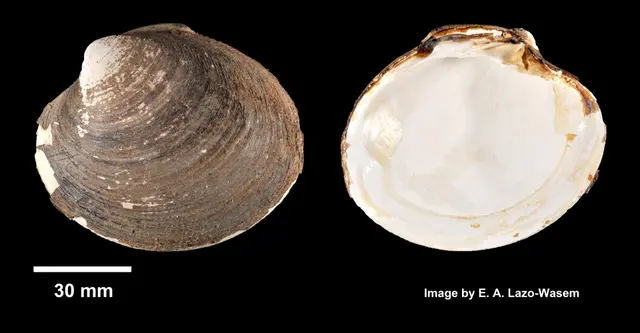
Ming the Clam: Counted at 405 Years, Recounted at 507
Ming, an ocean quahog dredged off Iceland in 2006, was first counted at 405 years from its crowded hinge. A recount checked against other shells found 507.
Ming (Arctica islandica): 81–83 m
Image credit
"Arctica islandica (YPM IZ 033067)" by Eric A. Lazo-Wasem, Yale Peabody Museum — https://commons.wikimedia.org/wiki/File:Arctica_islandica_(YPM_IZ_033067).jpeg — CC0 1.0 (https://creativecommons.org/publicdomain/zero/1.0/)
-
Lore check
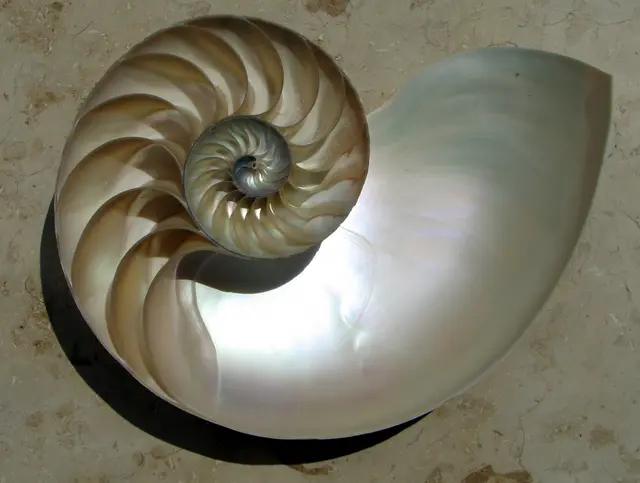
Nautilus Shell: Not a Golden Spiral, as Measured in 1838
A nautilus shell is a logarithmic spiral, but not a golden one: measured shells widen about 3x per turn, while a golden spiral widens 6.85x. See the data.
Nautilus pompilius: 130–700 m
Image credit
"NautilusCutawayLogarithmicSpiral" by Chris 73 / Wikimedia Commons — https://commons.wikimedia.org/wiki/File:NautilusCutawayLogarithmicSpiral.jpg — CC BY-SA 3.0 (https://creativecommons.org/licenses/by-sa/3.0/)
-
Entry
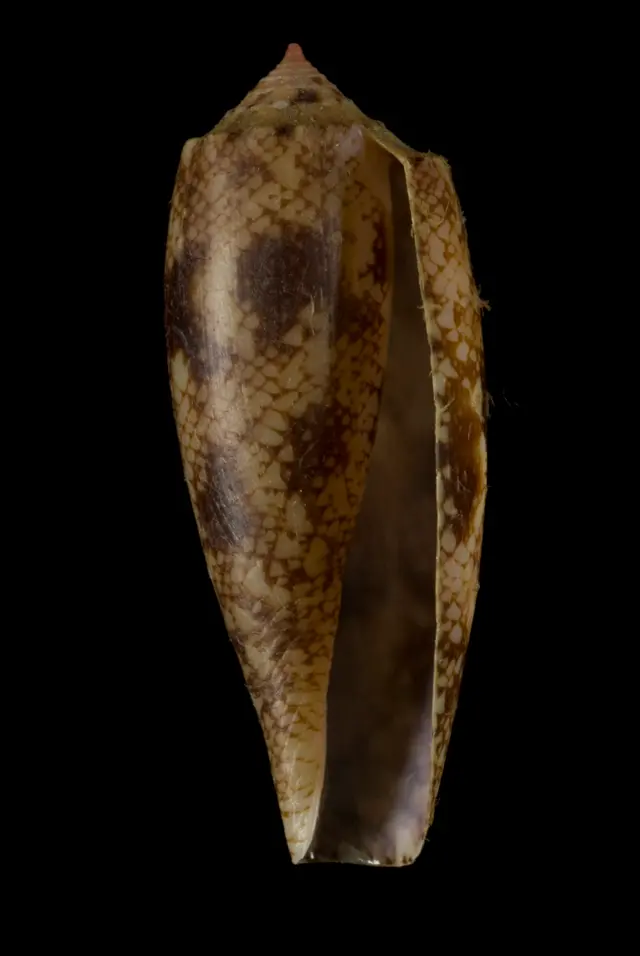
Geography Cone: The Snail That Hunts Fish With Insulin
The geography cone, Conus geographus, nets reef fish after its venom drops their blood sugar. It caused most recorded cone snail stings of people. See the data.
Conus geographus: 0–20 m
Image credit
"Conus geographus (MNHN-IM-2013-11448)" by Lardeur A. / MNHN - Museum national d'Histoire naturelle — https://commons.wikimedia.org/wiki/File:Conus_geographus_(MNHN-IM-2013-11448).jpeg — CC BY 4.0 (https://creativecommons.org/licenses/by/4.0/)