The Sounding
Every page with a depth, placed on one line from the surface to the Challenger Deep. Scroll the line sideways to descend.
- Betta splendens 0–1.2 m · wild marsh water depth, Chiang Rai · Aquarium
- Conus geographus 0–20 m · intertidal to about 20 m · Shells
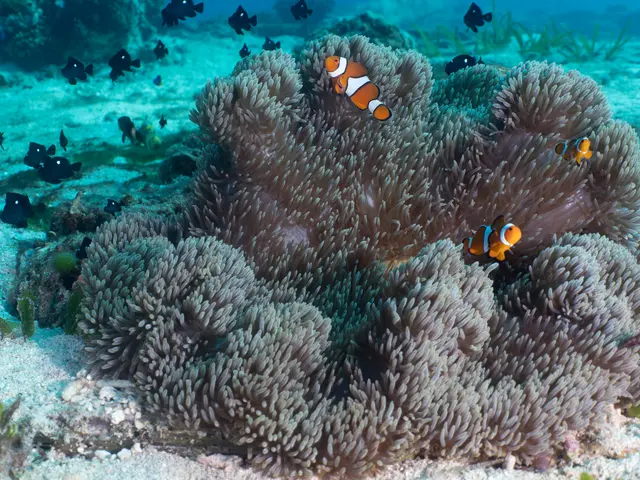
- Amphiprion ocellaris 1–15 m · wild range · Aquarium
- Famous wrecks in the table 70–6,895 m · seven wrecks, USS Monitor to USS Samuel B. Roberts · Ships & Wrecks
- Ming (Arctica islandica) 81–83 m · dredged alive in 2006, North Icelandic Shelf · Shells
- Nautilus pompilius 130–700 m · tracked at Osprey Reef · Shells
- Edmund Fitzgerald wreck 162 m · Lake Superior · Ships & Wrecks
- Malacosteus niger 600–1,000 m · reported range · Deep Sea
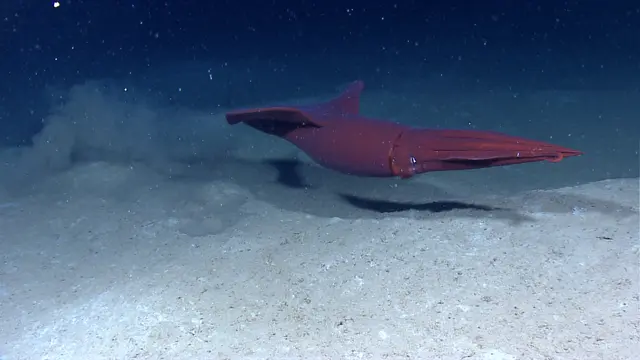
- Vampyroteuthis infernalis 600–3,300 m · recorded range · Deep Sea
- Ocean nitrate maximum (global mean) 1,000 m · ocean comparison, not tank depth · Aquarium
- Titanic wreck 3,800 m · Ships & Wrecks
- Challenger Deep 10,935 m · measurements differ by tens of meters · Deep Sea
- 0 m surface
- 200 m
- 1,000 m
- 3,800 m Titanic wreck
- 10,935 m Challenger Deep
depth increases →
Marks are evenly spaced, not to scale. Not for navigation. Fixed marks: 200 m and 1,000 m (NOAA Ocean Service); Titanic wreck 3,800 m (NOAA Ocean Exploration); Challenger Deep 10,935 m (NOAA Ocean Exploration).
Latest
-
Shells Lore check
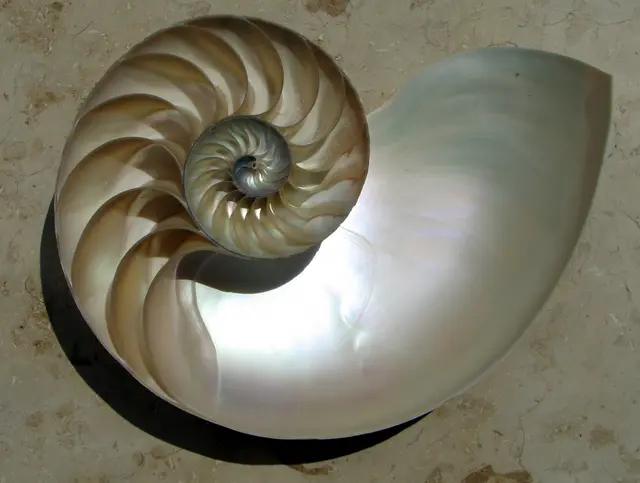
Nautilus Shell: Not a Golden Spiral, as Measured in 1838
A nautilus shell is a logarithmic spiral, but not a golden one: measured shells widen about 3x per turn, while a golden spiral widens 6.85x. See the data.
Nautilus pompilius: 130–700 m
Image credit
"NautilusCutawayLogarithmicSpiral" by Chris 73 / Wikimedia Commons — https://commons.wikimedia.org/wiki/File:NautilusCutawayLogarithmicSpiral.jpg — CC BY-SA 3.0 (https://creativecommons.org/licenses/by-sa/3.0/)
-
Deep Sea How it works
Why So Many Deep-Sea Animals Are Red, and Look Black
Seawater absorbs red light within tens of meters, so a red deep-sea animal reflects little and looks black. Pure-water charts, NOAA photos and a far-red fish.
Malacosteus niger: 600–1,000 m
Image credit
"Expl8167 (9660934349)" by NOAA Okeanos Explorer Program, Gulf of Mexico 2012 Expedition — https://commons.wikimedia.org/wiki/File:Expl8167_(9660934349).jpg — CC BY 2.0 (https://creativecommons.org/licenses/by/2.0/)
-
Aquarium How it works
Nitrogen Cycle in New Tanks: Why Nitrite Peaks After Ammonia
Nitrite peaks after ammonia because the microbes that clear it must wait for it. Weekly data from three new home tanks, in mg/L as N, and who does the work.
Ocean nitrate maximum (global mean): 1,000 m
Image credit
Illustration: Ocean Life & Lore. Generated illustration — not a photograph, specimen or historical record. Reuse: CC BY 4.0 (https://creativecommons.org/licenses/by/4.0/); no rights are claimed beyond what the law grants.
-
Ships & Wrecks Comparison table
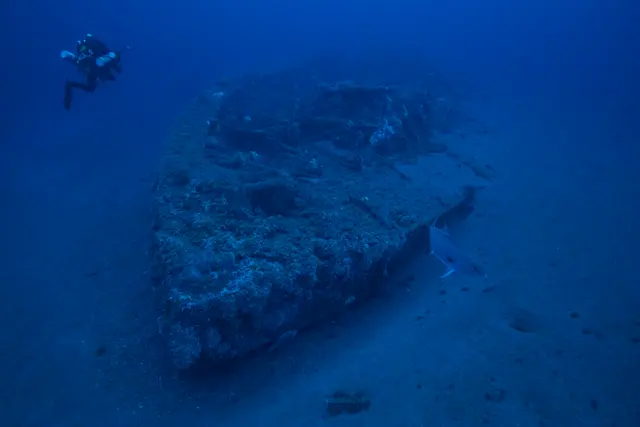
How Deep the Famous Wrecks Lie: Titanic Isn't the Deepest
Famous shipwrecks by depth: Titanic lies 3,800 m down, but two US Navy wrecks off the Philippines lie below 6,000 m. Depths, find dates and methods in a CSV.
Famous wrecks in the table: 70–6,895 m
Image credit
"MNMS - Monitor (27979358485)" by NOAA — https://commons.wikimedia.org/wiki/File:MNMS_-_Monitor_(27979358485).jpg — Public domain (US federal government work: NOAA Office of National Marine Sanctuaries photograph, credited Photo Credit: NOAA)
-
Deep Sea How it works
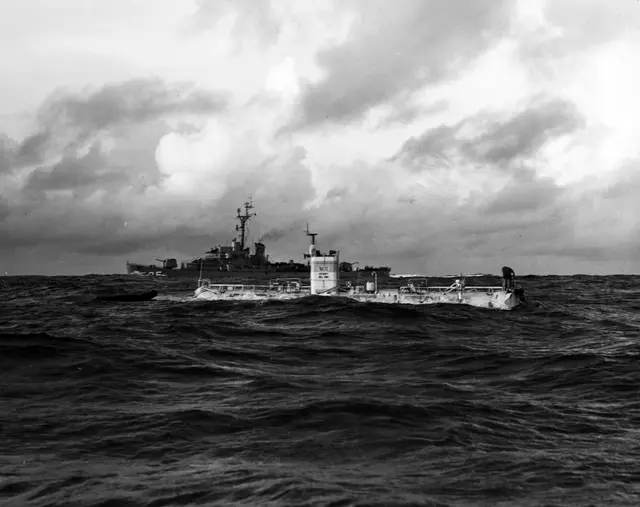
Challenger Deep: The Deepest Spot Has No Single Agreed Depth
The Challenger Deep is about 10,935 m (35,876 ft) deep, yet surveys disagree by tens of meters. How a line, echoes, a gauge and a submersible measured it.
Challenger Deep: 10,935 m
Image credit
"Bathyscaphe Trieste with USS Lewis (DE-535) over the Marianas Trench on 23 January 1960 (USN 710619)" by U.S. Navy (photo USN 710619) — https://commons.wikimedia.org/wiki/File:Bathyscaphe_Trieste_with_USS_Lewis_(DE-535)_over_the_Marianas_Trench_on_23_January_1960_(USN_710619).jpg — Public domain (US federal government work: official U.S. Navy photograph USN 710619, Naval History and Heritage Command collection)
-
Aquarium Entry
Clownfish: The Largest in Each Anemone Is the Female
Clownfish (Amphiprion ocellaris) live 1–15 m deep in three kinds of sea anemone. The biggest fish in each group is the female, and every female began as a male.
Amphiprion ocellaris: 1–15 m
Image credit
"Ocellaris clownfish (Amphiprion ocellaris) and Threespot dascyllus (Dascyllus trimaculatus) (48272091521)" by Rickard Zerpe — https://commons.wikimedia.org/wiki/File:Ocellaris_clownfish_(Amphiprion_ocellaris)_and_Threespot_dascyllus_(Dascyllus_trimaculatus)_(48272091521).jpg — CC BY 2.0 (https://creativecommons.org/licenses/by/2.0/)



Lore Checks
Stories told about the sea, each sounded against the evidence and given one verdict: holds, bends, sinks or unsounded.
- holds
The nautilus shell is a logarithmic spiral
Image credit
"NautilusCutawayLogarithmicSpiral" by Chris 73 / Wikimedia Commons — https://commons.wikimedia.org/wiki/File:NautilusCutawayLogarithmicSpiral.jpg — CC BY-SA 3.0 (https://creativecommons.org/licenses/by-sa/3.0/)
- bends
Red animals are invisible in the deep
Image credit
"Expl8167 (9660934349)" by NOAA Okeanos Explorer Program, Gulf of Mexico 2012 Expedition — https://commons.wikimedia.org/wiki/File:Expl8167_(9660934349).jpg — CC BY 2.0 (https://creativecommons.org/licenses/by/2.0/)
- bends
Nitrosomonas and Nitrobacter run your filter
Image credit
Illustration: Ocean Life & Lore. Generated illustration — not a photograph, specimen or historical record. Reuse: CC BY 4.0 (https://creativecommons.org/licenses/by/4.0/); no rights are claimed beyond what the law grants.
By category
Deep Sea
Animals below 200 m and how they handle light, pressure and food; trench and vent geology; deep submersibles; and how an unseen seafloor gets sounded.
- Start here Why So Many Deep-Sea Animals Are Red, and Look Black 600–1,000 m
- Challenger Deep: The Deepest Spot Has No Single Agreed Depth 10,935 m
- Vampire Squid: It Drinks No Blood and Eats Marine Snow 600–3,300 m
All of Deep Sea 3 pages
Aquarium
Fish species data from original studies and the water chemistry a tank must run, from the nitrogen cycle to pH and hardness; no gear reviews or care diaries.
- Nitrogen Cycle in New Tanks: Why Nitrite Peaks After Ammonia 1,000 m
- Clownfish: The Largest in Each Anemone Is the Female 1–15 m
- Betta Fish: A Marsh Fish That Breathes Air at the Surface 0–1.2 m
All of Aquarium 3 pages
Shells
The math of logarithmic spirals, how shells grow, how to tell shell groups apart, nacre and color, and shells in history, from cowrie money to Tyrian purple.
- Start here Ming the Clam: Counted at 405 Years, Recounted at 507 81–83 m
- Nautilus Shell: Not a Golden Spiral, as Measured in 1838 130–700 m
- Geography Cone: The Snail That Hunts Fish With Insulin 0–20 m
All of Shells 3 pages
Ships & Wrecks
Ship construction and rigging, famous wrecks at sea and on lakes read from official inquiries and surveys, navigation, lighthouses and underwater archaeology.
- Start here How Deep the Famous Wrecks Lie: Titanic Isn't the Deepest 70–6,895 m
- Titanic: No 300-Foot Gash, and She Did Not Sink in One Piece 3,800 m
- Edmund Fitzgerald: Hatch Covers Blamed in a Split 1978 Vote 162 m
All of Ships & Wrecks 3 pages
Search
Every page on the site: articles by category, then the terms and the site pages.
Deep Sea
- Why So Many Deep-Sea Animals Are Red, and Look Black Malacosteus niger, 600–1,000 m
- Challenger Deep: The Deepest Spot Has No Single Agreed Depth Challenger Deep, 10,935 m
- Vampire Squid: It Drinks No Blood and Eats Marine Snow Vampyroteuthis infernalis, 600–3,300 m
Aquarium
- Nitrogen Cycle in New Tanks: Why Nitrite Peaks After Ammonia Ocean nitrate maximum (global mean), 1,000 m
- Clownfish: The Largest in Each Anemone Is the Female Amphiprion ocellaris, 1–15 m
- Betta Fish: A Marsh Fish That Breathes Air at the Surface Betta splendens, 0–1.2 m
Shells
- Nautilus Shell: Not a Golden Spiral, as Measured in 1838 Nautilus pompilius, 130–700 m
- Ming the Clam: Counted at 405 Years, Recounted at 507 Ming (Arctica islandica), 81–83 m
- Geography Cone: The Snail That Hunts Fish With Insulin Conus geographus, 0–20 m
Ships & Wrecks
- How Deep the Famous Wrecks Lie: Titanic Isn't the Deepest Famous wrecks in the table, 70–6,895 m
- Titanic: No 300-Foot Gash, and She Did Not Sink in One Piece Titanic wreck, 3,800 m
- Edmund Fitzgerald: Hatch Covers Blamed in a Split 1978 Vote Edmund Fitzgerald wreck, 162 m
Terms used here
Categories and site pages
- Deep Sea Category, 3 pages
- Aquarium Category, 3 pages
- Shells Category, 3 pages
- Ships & Wrecks Category, 3 pages
- About Ocean Life & Lore
- Corrections logbook
- Privacy and cookies
- Report a correction
- Cite and reuse
Nothing on the site matches that yet.